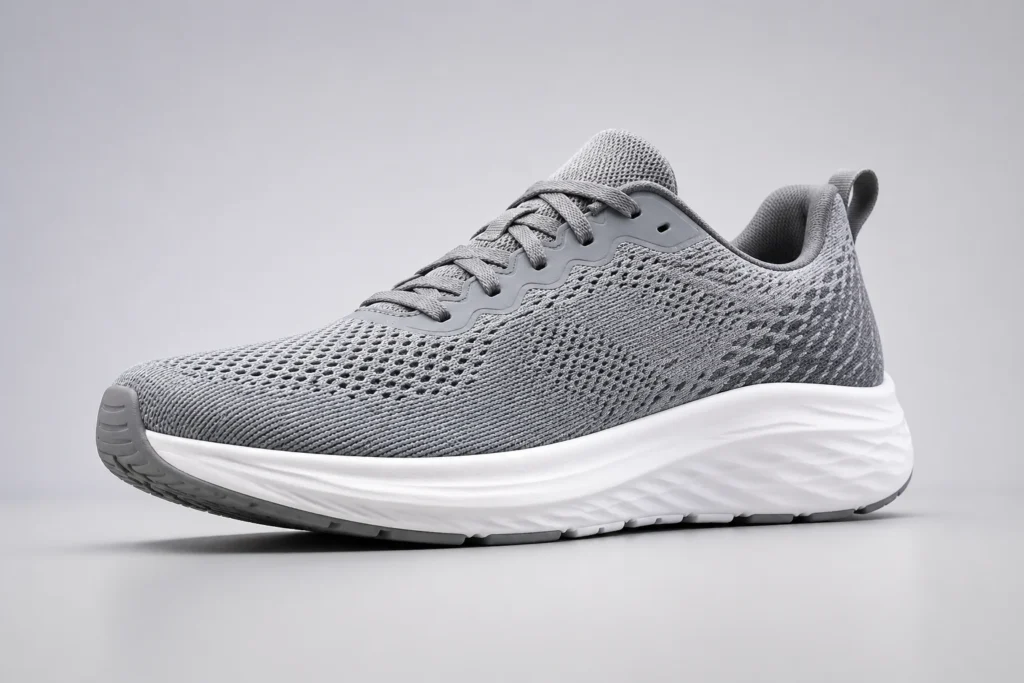
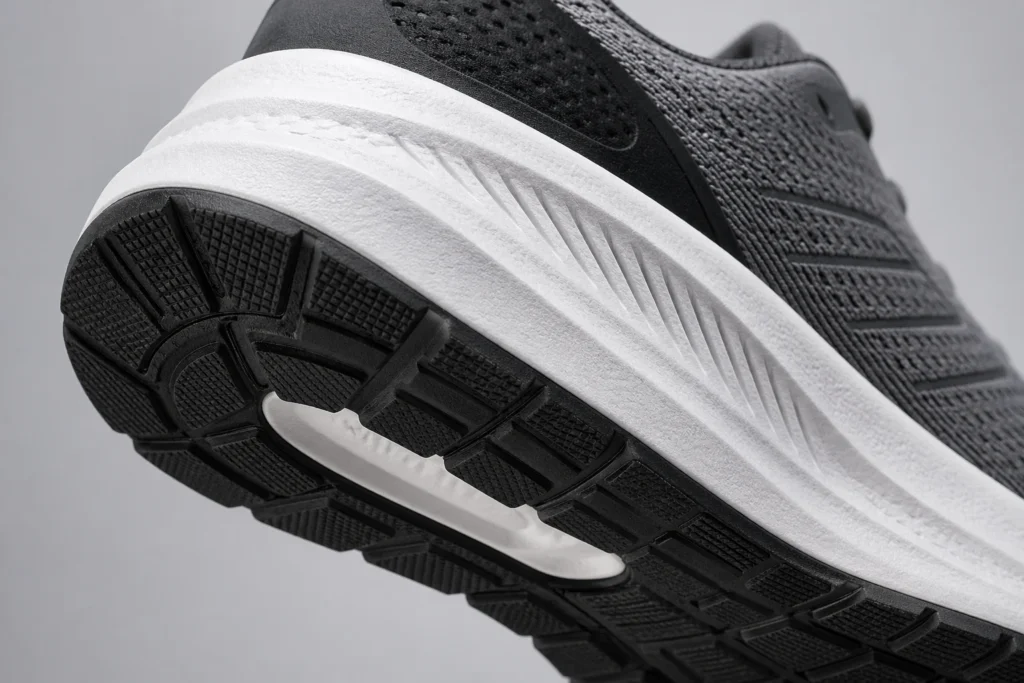
EVA is one of the most widely used materials in sports shoe midsoles and lightweight soles. It is popular because it offers a useful balance of light weight, cushioning, flexibility, moldability, and cost efficiency. For buyers developing running shoes, training shoes, casual sneakers, kids shoes, or private label athletic footwear, understanding EVA helps with better material selection.
However, EVA is not suitable for every shoe in the same way. Its performance depends on density, formulation, molding process, outsole design, and how the shoe will be used. This article explains the benefits, limitations, and practical buyer tips for using EVA soles in sports shoes.
What Is EVA Material?
EVA stands for Ethylene Vinyl Acetate. In footwear, EVA foam is commonly used for midsoles, lightweight outsoles, insoles, and cushioning components. It is valued because it can be molded into different shapes and densities while remaining lightweight and comfortable.
In sports shoes, EVA is often used as the midsole material because it helps absorb impact and reduce the overall weight of the shoe. Depending on the design, EVA may be combined with rubber outsole pieces to improve grip and wear resistance.
Key Benefits of EVA Soles
1. Lightweight Comfort
One of the main reasons EVA is used in sports footwear is its low weight. A lighter shoe can feel more comfortable for running, walking, training, travel, and daily wear. For buyers targeting comfort-focused markets, lightweight construction is often a strong selling point.
2. Cushioning and Shock Absorption
EVA foam provides cushioning under the foot. When the foot contacts the ground, the midsole compresses and helps absorb part of the impact. This makes EVA suitable for many running shoes, walking shoes, training shoes, and casual sneakers.
3. Flexibility
EVA can provide good flexibility depending on the density and sole design. Flexible shoes are useful for casual sneakers, lightweight training shoes, kids shoes, and other products where comfort and natural movement are important.
4. Cost Efficiency
Compared with some advanced cushioning systems, EVA can provide practical comfort at a more accessible cost. This makes it suitable for both affordable sports shoes and mid-range private label footwear.
5. Easy Molding and Design Flexibility
EVA can be molded into different shapes, textures, thicknesses, and visual designs. This gives manufacturers flexibility when developing midsoles, lightweight sole units, and customized appearance details for different shoe categories.
Limitations of EVA Soles
Although EVA has many advantages, buyers should also understand its limitations. This helps avoid choosing the wrong sole structure for the wrong product use.
- Compression over time: EVA cushioning may become less responsive after long-term use, especially if the density is too soft.
- Wear resistance: EVA alone is usually not as durable as rubber for high-abrasion outsole areas.
- Grip performance: EVA may need rubber outsole pieces or texture design when strong traction is required.
- Heat and storage conditions: material performance can be affected by formulation, production process, and long-term storage.
- Density differences: low-density EVA feels softer and lighter, while higher-density EVA may offer better support and durability.
EVA vs Rubber vs PU vs TPR
Different sole materials have different advantages. The best choice depends on the shoe category, target price, comfort requirement, and expected use environment.
| Material | Main Advantages | Common Use in Sports Shoes |
| EVA | Lightweight, cushioned, flexible, cost-efficient, easy to mold. | Midsoles, lightweight soles, running shoes, casual sneakers, kids shoes. |
| Rubber | Good grip, wear resistance, durability, outsole protection. | Outsoles, high-wear zones, running shoes, training shoes, hiking shoes. |
| PU | Supportive cushioning, durability, premium feel depending on formulation. | Some midsoles, casual shoes, work shoes, and comfort footwear. |
| TPR | Flexible, moldable, practical for many outsole designs. | Casual shoes, kids shoes, some lightweight sports styles. |
Which Shoe Categories Are Suitable for EVA Soles?
EVA can be used in many sports and casual footwear categories. The structure should be adjusted according to the expected performance.
- Running shoes: EVA midsoles help provide lightweight cushioning. Rubber outsole pieces can be added for grip and durability.
- Training shoes: EVA can provide comfort, while outsole design should support stability and traction.
- Casual sneakers: EVA helps create lightweight comfort for daily wear.
- Kids shoes: lightweight EVA can improve comfort, but durability and grip should be considered.
- Walking shoes: EVA cushioning can support comfort for long periods of daily use.
- Barefoot-style shoes: EVA may be used carefully where flexibility and lightweight comfort are required, depending on the design goal.
Buyer Tips for Choosing EVA Soles
When discussing EVA soles with a manufacturer, buyers should not only ask whether the shoe uses EVA. They should also confirm density, softness, outsole combination, target use, sample testing, and long-term comfort requirements.
- Confirm whether EVA is used for the midsole, outsole, or full sole unit.
- Ask whether rubber pieces are needed in high-wear outsole areas.
- Check the softness and density based on target customers and shoe category.
- Review samples for cushioning, flexibility, stability, and appearance.
- Consider whether the target market values lightweight comfort, durability, grip, or price most.
- Use different EVA structures for different categories instead of applying one material solution to every shoe.
How EVA Supports Private Label Sports Shoes
For private label buyers, EVA is a practical material because it offers comfort and design flexibility without making the product too heavy or too expensive. Buyers can select existing models with EVA midsoles, customize color combinations, add brand logos, and adjust outsole details depending on the target market.
For more performance-focused products, buyers may combine EVA midsoles with rubber outsoles or special tread patterns to improve durability and traction.
Frequently Asked Questions
Q1: Are EVA soles good for running shoes?
EVA is commonly used in running shoe midsoles because it is lightweight and cushioned. For better durability and grip, many running shoes combine EVA midsoles with rubber outsole areas.
Q2: Is EVA more durable than rubber?
EVA is lighter and more cushioned, while rubber usually provides better grip and wear resistance. Many sports shoes use EVA for cushioning and rubber for outsole contact areas.
Q3: Can EVA soles be customized?
Yes. EVA soles can be customized in shape, thickness, color, texture, and density depending on the design, mold, order quantity, and production requirements.
Q4: What should buyers check in an EVA sole sample?
Buyers should check weight, cushioning feel, flexibility, outsole grip, visual appearance, size fitting, and whether the sole structure matches the intended use.
Conclusion
EVA soles are widely used in sports shoes because they provide lightweight cushioning, flexibility, design freedom, and practical cost efficiency. At the same time, buyers should consider durability, outsole grip, density, and long-term performance when choosing EVA for different footwear categories.
If you are developing running shoes, training shoes, casual sneakers, kids shoes, or private label sports footwear, contact us to discuss suitable EVA sole options, outsole combinations, and sample development.