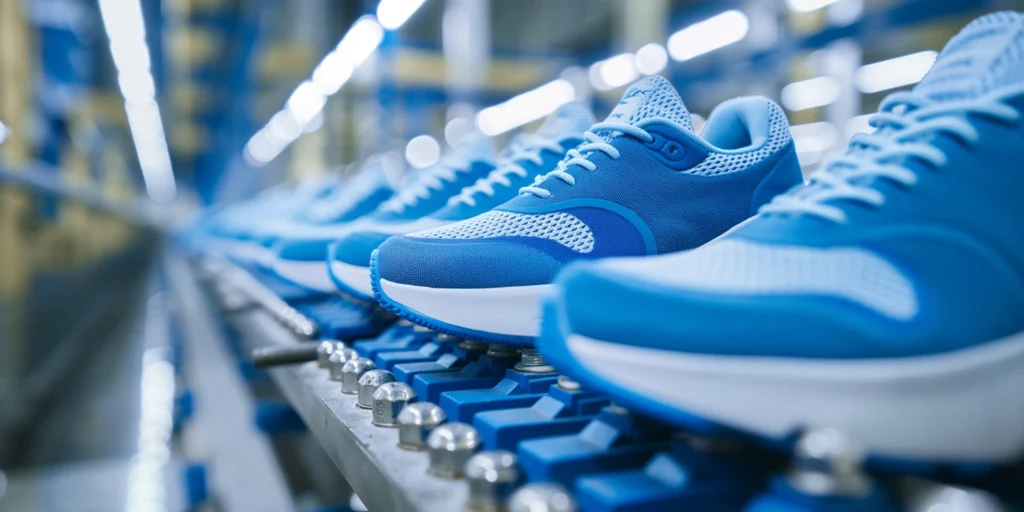
Choosing the right sports shoes manufacturer is one of the most important decisions for a footwear brand, wholesaler, distributor, or e-commerce seller. A good factory can support product development, stable quality, delivery planning, and long-term brand growth. A poor supplier, on the other hand, can create problems such as inconsistent sizing, weak sole bonding, delayed shipments, unclear communication, and unexpected costs.
For international buyers sourcing from China, the goal is not only to find a low price. The real goal is to find a manufacturing partner that understands product requirements, export standards, custom branding, and repeat-order cooperation. This guide explains the key factors B2B buyers should check before choosing a sports shoes manufacturer in China.
1. Check the Factory Experience in Sports Shoe Production
Sports shoes are more complex than ordinary casual footwear. They involve upper materials, cushioning structures, outsole grip, bonding strength, fitting comfort, and visual design. When evaluating a manufacturer, buyers should first check whether the factory has real experience producing the type of footwear they need.
A reliable sports shoe factory should be able to explain its experience with different categories, such as running shoes, training shoes, casual sneakers, barefoot shoes, hiking shoes, kids shoes, or private label athletic footwear. The factory should also understand how different materials and construction methods affect comfort, durability, and price.
- Ask how many years the factory has produced sports shoes or athletic footwear.
- Check whether the factory has experience with your target category.
- Ask for product photos, sample references, or production examples.
- Confirm whether the factory can support both basic designs and customized development.
2. Evaluate Production Capacity and Lead Time
Production capacity is not only about how many pairs a factory can produce. It is also about whether the factory can deliver stable quality within the agreed schedule. This is especially important for seasonal products, promotional campaigns, retail launches, or repeat orders.
Buyers should ask about the number of production lines, monthly capacity, sample lead time, mass production lead time, and peak-season scheduling. A professional supplier should provide realistic timelines instead of promising unrealistically fast delivery just to win an order.
| Question to Ask | Why It Matters |
| How many production lines do you have? | Shows whether the factory can handle your order volume. |
| What is your typical monthly capacity? | Helps buyers plan repeat orders and seasonal demand. |
| How long does sample development take? | Important for new designs, logo samples, and buyer approval. |
| What is your normal mass production lead time? | Helps buyers plan shipping, product launches, and inventory. |
| Do you provide production updates? | Improves transparency during bulk order production. |
3. Review the Quality Control System
Quality control is one of the most important factors in sports shoe manufacturing. Since footwear is used for walking, running, training, or daily movement, buyers need consistent quality in stitching, bonding, fitting, outsole grip, and appearance.
A reliable factory should have quality control at different production stages. Raw materials should be checked before cutting. Upper stitching should be inspected during sewing. Sole bonding should be checked during assembly. Finished shoes should be reviewed before packing and shipment.
- Raw material inspection: checking mesh, synthetic leather, EVA, rubber, laces, and accessories before production.
- In-line inspection: monitoring cutting, stitching, logo application, lasting, bonding, and assembly during production.
- Final inspection: checking size, appearance, symmetry, glue marks, outsole bonding, color consistency, and packaging before shipment.
- Pre-shipment inspection: confirming order quantity, carton marks, packing method, and buyer requirements before loading.
4. Confirm OEM, ODM, and Private Label Capabilities
Different buyers have different sourcing needs. Some brands need OEM production based on their own designs. Some wholesalers prefer ODM designs from the factory. New brands may start with private label shoes by adding their logo, colors, and packaging to an existing model.
Before cooperation, buyers should confirm what customization options the manufacturer can support. This includes logo placement, upper materials, color combinations, outsole design, insole branding, shoebox design, hangtags, carton marks, and barcode labels.
| Customization Area | Examples |
| Logo | Tongue label, side logo, insole logo, outsole logo, shoebox logo |
| Materials | Breathable mesh, synthetic leather, knitted upper, EVA midsole, rubber outsole |
| Colors | Upper color, sole color, lace color, lining color, logo color |
| Packaging | Custom shoebox, hangtag, tissue paper, carton mark, barcode label |
| Design Development | Existing ODM model, modified model, or fully custom OEM design |
5. Check Sample Development Process
Samples are very important before placing a bulk order. A sample allows the buyer to check design, comfort, material quality, logo effect, color matching, size fitting, and workmanship. For custom sports shoes, sample confirmation can reduce the risk of misunderstanding during mass production.
A professional manufacturer should provide clear sample steps. The buyer confirms design requirements, materials, colors, logo position, and packaging details. The factory then prepares a sample for review. If needed, the sample can be adjusted before bulk production starts.
6. Pay Attention to Communication and Export Experience
Smooth communication is critical in international sourcing. A reliable sports shoes manufacturer should respond clearly, provide detailed quotations, explain technical options, and confirm order details in writing. Good communication helps prevent mistakes in materials, colorways, logo application, packaging, and delivery time.
Export experience is also important. Suppliers that regularly work with overseas buyers are usually more familiar with shipping terms, documentation, carton requirements, product labeling, and buyer inspection procedures.
7. Watch for Red Flags Before Placing an Order
Not every supplier is suitable for long-term cooperation. Buyers should be careful if a factory gives unclear answers, avoids sample details, offers a price that is much lower than the market, or cannot explain its production process.
- The supplier only talks about price but cannot explain materials or quality control.
- The quotation is unclear and does not include material, packaging, or shipping details.
- The factory cannot provide a realistic sample or production timeline.
- The supplier refuses to confirm specifications in writing.
- The factory has no clear process for inspection, packing, or order follow-up.
Factory Evaluation Checklist for Buyers
| Checklist Item | What to Confirm |
| Product Experience | Does the factory produce your target footwear category? |
| Customization | Can the factory support logo, material, color, and packaging customization? |
| MOQ | Is the minimum order quantity suitable for your business stage? |
| Samples | Can the factory provide samples before bulk production? |
| Quality Control | Does the factory inspect materials, production, finished shoes, and packing? |
| Lead Time | Are sample time and production time realistic? |
| Communication | Are quotations and specifications clear? |
| Export Support | Can the supplier support international shipping and documentation? |
Frequently Asked Questions
Q1: What should I ask a sports shoes manufacturer before ordering?
You should ask about MOQ, sample cost, sample lead time, mass production lead time, customization options, quality inspection process, packaging support, and export experience.
Q2: Can I customize sports shoes with my own logo?
Yes. Many OEM and private label sports shoes manufacturers can add logos on the tongue label, side panel, insole, outsole, shoebox, hangtag, or carton label.
Q3: Is OEM or ODM better for a new brand?
ODM is often easier for new brands because it uses existing factory designs and requires less development time. OEM is better when the buyer already has a unique design and technical specifications.
Q4: Why is sample approval important?
Sample approval helps confirm design, materials, colors, size fitting, logo placement, and workmanship before mass production. It reduces misunderstandings and quality risks.
Conclusion
Choosing a reliable sports shoes manufacturer in China requires more than comparing prices. Buyers should evaluate experience, production capacity, quality control, customization ability, sample development, communication, and export support. A professional manufacturing partner can help brands develop better products, reduce sourcing risks, and build long-term market competitiveness.